Trade Lifecycle Management for SEBI RAs: Why Structure Matters More Than Ever
Trade lifecycle management for Research Analysts is the structured documentation and communication of trade entry, updates, and exits with time-stamped records and audit-ready logs aligned with SEBI requirements.

For SEBI-registered Research Analysts, advisory does not end at giving a trade idea. From the regulator’s perspective, how a trade is communicated, updated, and closed matters just as much as the idea itself.
This entire journey, from entry to exit, is known as the trade lifecycle.
In 2025, unstructured trade communication is one of the largest operational and audit risks for Research Analysts. This is why trade lifecycle management for RAs has become a core requirement for compliant, scalable advisory businesses.
 Team Cirrus
This article explains what trade lifecycle management truly means, why informal methods often fail, and how structured trade logs and audit trails safeguard both RAs and investors.
What Is Trade Lifecycle Management for Research Analysts?

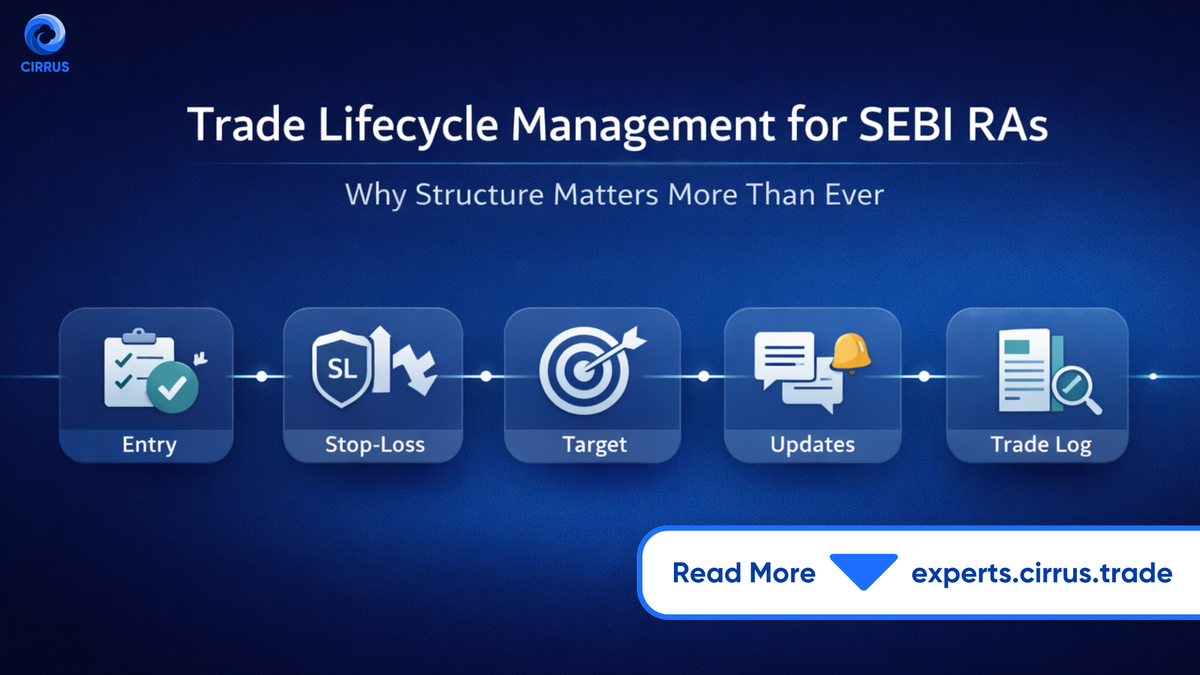
Trade lifecycle management refers to the structured documentation and communication of every stage of a trade, including:
- Trade entry
- Stop-loss definition
- Target definition
- Updates or modifications
- Partial exits (if any)
- Final exit
For SEBI RAs, this lifecycle must be:
- Time-stamped
- Traceable
- Consistent
- Auditable
Without structure, advisory delivery becomes subjective, which creates problems during disputes or audits.
This is why trade lifecycle management RA workflows are now essential.
Why SEBI RAs Can’t Afford Unstructured Trade Delivery
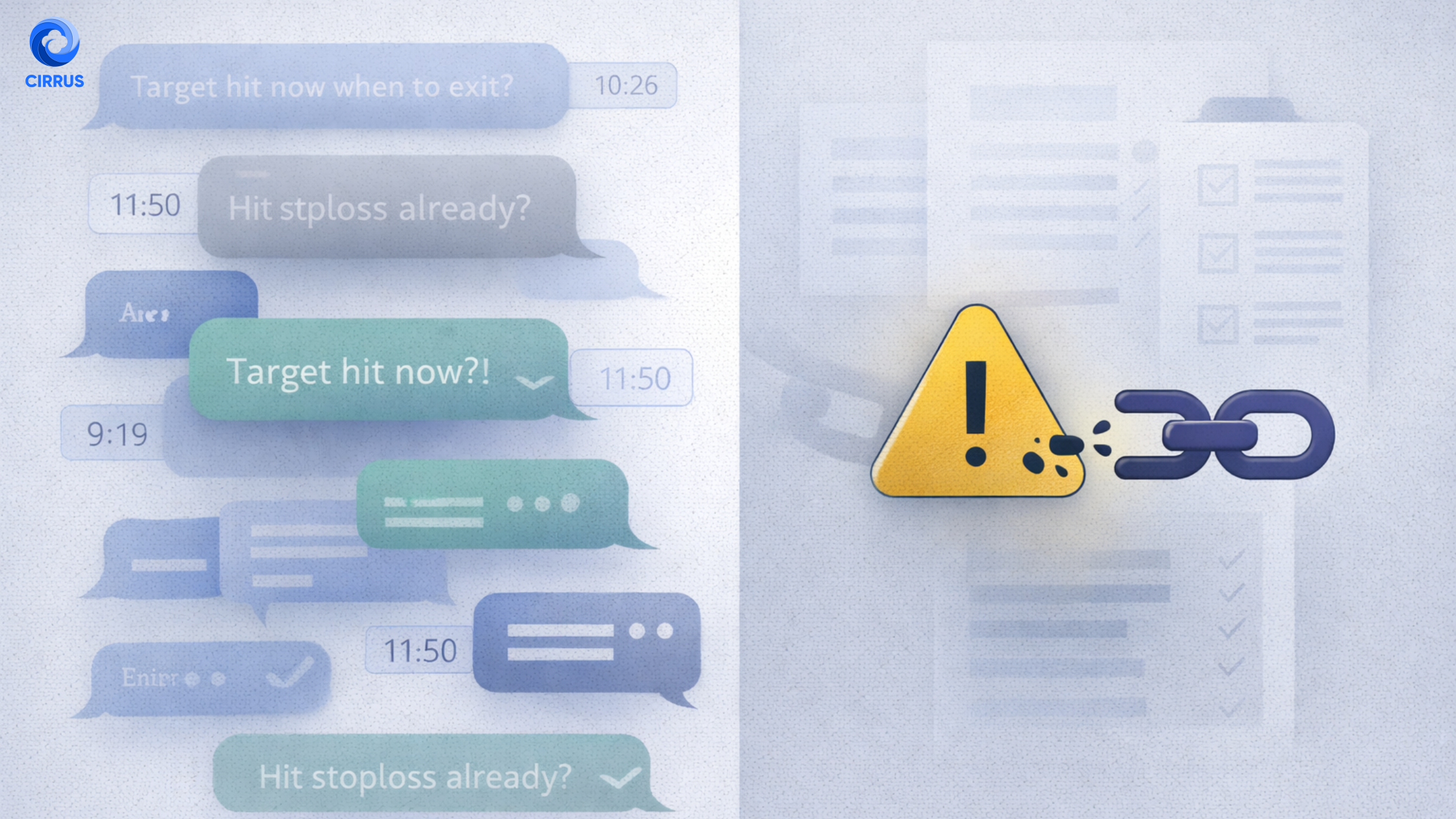
Many Research Analysts still rely on:
- Telegram messages
- WhatsApp texts
- Manual follow-ups
- Clarifications spread across chats
While this works at a small scale, it breaks down as advisory grows.
1. Lack of clear trade logs
When trades are shared informally, reconstructing what happened later becomes difficult.
During a SEBI audit, the absence of proper trade logs for RAs can raise questions around transparency and recordkeeping.
2. Ambiguity in trade updates
Without structured lifecycle updates:
- Users interpret trades differently
- Entry or exit timing becomes disputed
- Clarifications turn reactive
This weakens trust and increases operational noise.
3. Audit exposure
SEBI audits focus on:
- What was advised
- When it was advised
- How it was updated
- Whether records are consistent
Unstructured chats fail this test.
This is where trade lifecycle RA documentation becomes critical.
What a Structured Trade Lifecycle Looks Like
A compliant trade lifecycle framework includes:
- Single trade identifier
- Clearly defined entry price
- Pre-defined stop-loss and targets
- Time-stamped updates
- Explicit exit communication
- Archived trade logs
When advisory follows this structure, disputes reduce, and audits become manageable.
This is the foundation of trade lifecycle management for RAs.
 Team Cirrus
Trade Logs: The Backbone of Advisory Transparency
Trade logs are not optional records. They are the evidence layer of advisory.
A proper trade log captures:
- Strategy name
- Instrument
- Entry and exit timestamps
- Price levels
- Outcome
For SEBI RAs, maintaining trade logs RA in a structured format is critical for audit readiness and credibility.
Manual reconstruction after the fact is risky and often inaccurate.
Why Manual Trade Tracking Fails at Scale
Manual systems rely on:
- Memory
- Chat history
- Multiple spreadsheets
As advisory businesses grow, these systems create:
- Inconsistencies
- Missing data
- Reporting delays
This is why trade lifecycle management must be system-driven, not memory-driven.
Trade Lifecycle Management and SEBI Audits
During a SEBI audit, regulators may examine:
- Trade consistency
- Update frequency
- Documentation quality
- Historical accuracy
Structured lifecycle management ensures:
- Every trade is traceable
- Updates are timestamped
- Logs are retrievable
This significantly reduces audit friction.
Simply put, SEBI audit readiness depends heavily on how well trade lifecycles are managed.
 Team Cirrus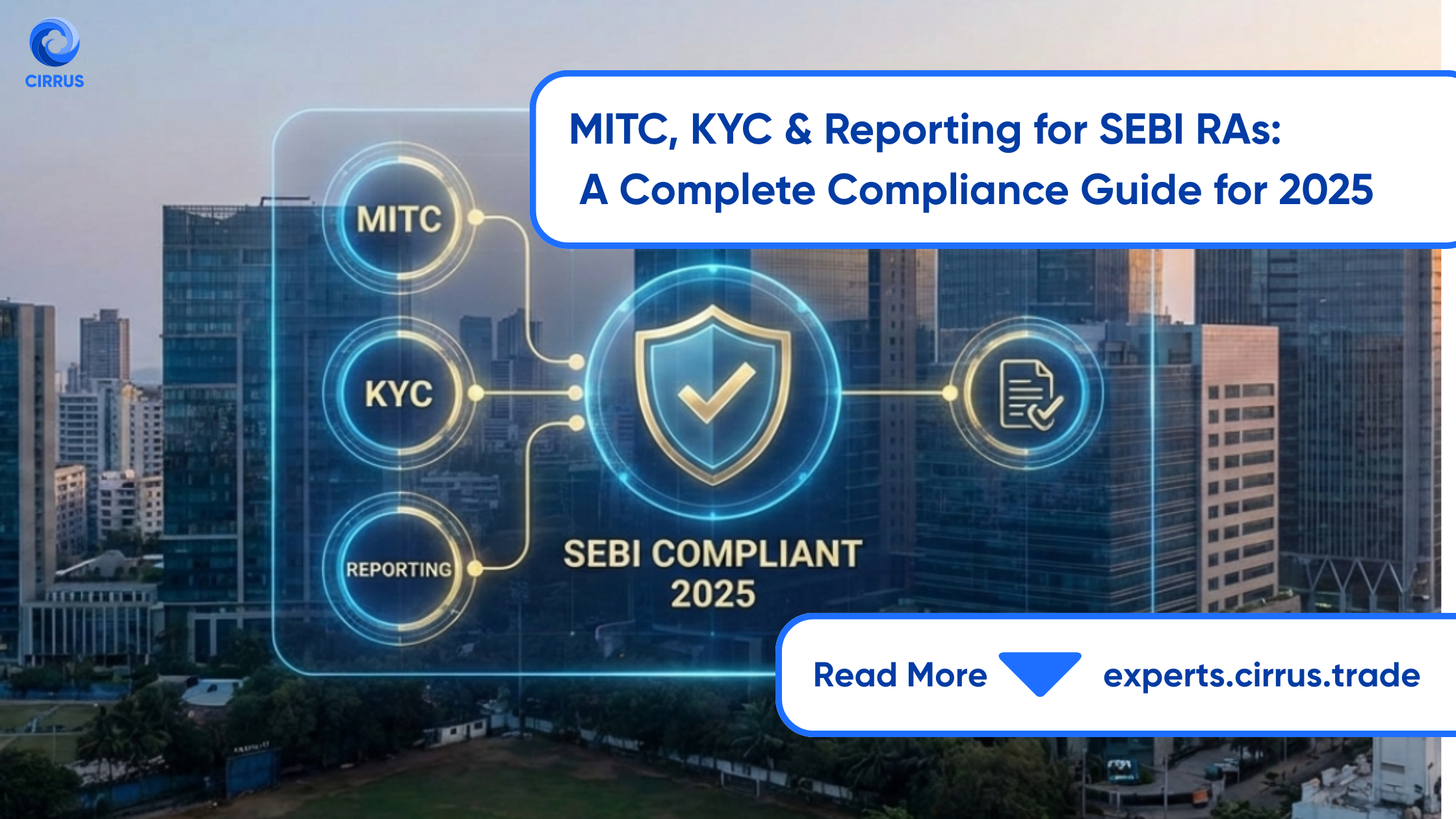
How Structured Trade Lifecycle Improves Investor Trust
Investors may not track every regulatory detail, but they feel the structure.
When trades are delivered clearly:
- Confidence improves
- Confusion reduces
- Complaints drop
A professional lifecycle framework improves perception, retention, and long-term trust.
This is why tools for Research Analysts must support structured trade delivery - not just message broadcasting.
What to Look for in Trade Lifecycle Tools
When evaluating a Research Analyst platform in India, RAs should ensure it supports:
- End-to-end trade lifecycle logging
- Time-stamped updates
- Immutable trade history
- Easy audit retrieval
- Minimal manual intervention
The goal is not more trades, but cleaner trades.
Why Trade Structure Enables Scale
Research Analysts who want to scale advisory business must reduce ambiguity.
Structured trade lifecycle management:
- Reduces clarification overhead
- Improves reporting quality
- Simplifies audits
- Protects research credibility
This allows RAs to grow without increasing operational stress.
FAQ
Q1. What is trade lifecycle management for SEBI RAs? It is the structured recording and communication of trade entry, updates, and exits in an auditable format.
Q2. Why are trade logs important for Research Analysts? Trade logs provide transparency, reduce disputes, and support SEBI audit requirements.
Q3. How does the trade lifecycle structure help during SEBI audits? It ensures every advisory action is time-stamped, traceable, and easy to retrieve.
Q4. Can unstructured trade delivery create compliance risk? Yes. Informal chat-based delivery makes audits and dispute resolution difficult.
Q5. Does structured trade lifecycle management help RAs scale? Yes. It reduces ambiguity, admin work, and operational stress as subscriber volume grows.
Final Thoughts
Trade ideas may start in the mind, but they must live in systems.
For SEBI-registered Research Analysts, trade lifecycle management is no longer optional. It is the backbone of compliant advisory delivery.
Those who invest in structured trade lifecycle RA workflows, robust trade logs, and audit-ready systems will be best positioned to scale confidently.
Because in 2025, structure is what separates professional advisory from informal advice.