Model Portfolio Rebalancing for Research Analysts: A Practical Real-Time Framework
A model portfolio for Research Analysts is a structured basket of instruments managed using defined allocation logic and rebalanced in real time to maintain strategy alignment and transparency.


by
As SEBI-registered Research Analysts scale their advisory businesses, individual trade calls alone are no longer enough. Investors increasingly expect structured portfolios, not scattered ideas.
This is where model portfolios come in.
However, building a model portfolio is only half the job. The real challenge lies in how portfolios are maintained, updated, and rebalanced in real time, without confusion, disputes, or compliance risk.
In 2025, model portfolio rebalancing for Research Analysts has become a core capability for professional advisory businesses. This article explains how model portfolios work, why rebalancing is difficult without systems, and how RAs can implement a practical, real-time rebalancing framework.
 Team Cirrus
What Is a Model Portfolio for Research Analysts?
A model portfolio is a pre-defined basket of instruments, created and managed by a Research Analyst, designed to reflect a specific strategy or risk profile.
For SEBI RAs, model portfolios typically:
- Follow a defined allocation logic
- Represent a strategy (e.g., momentum, swing, positional)
- Are updated periodically
- Serve as a reference framework for subscribers. Unlike standalone calls, SEBI RA portfolios offer structure, clarity, and long-term visibility.
This is why the adoption of RA model portfolios is increasing rapidly.
Why Model Portfolios Create Operational Complexity
While model portfolios look clean on paper, execution is complex in practice.
As subscriber counts grow, Research Analysts face challenges such as:
- Multiple rebalancing actions
- Mid-cycle portfolio changes
- Subscriber confusion on updates
- Difficulty tracking who acted when
Without structure, portfolios quickly become inconsistent across users.This is why model portfolio RA workflows must include rebalancing systems, not just allocation logic.
What Portfolio Rebalancing Actually Involves
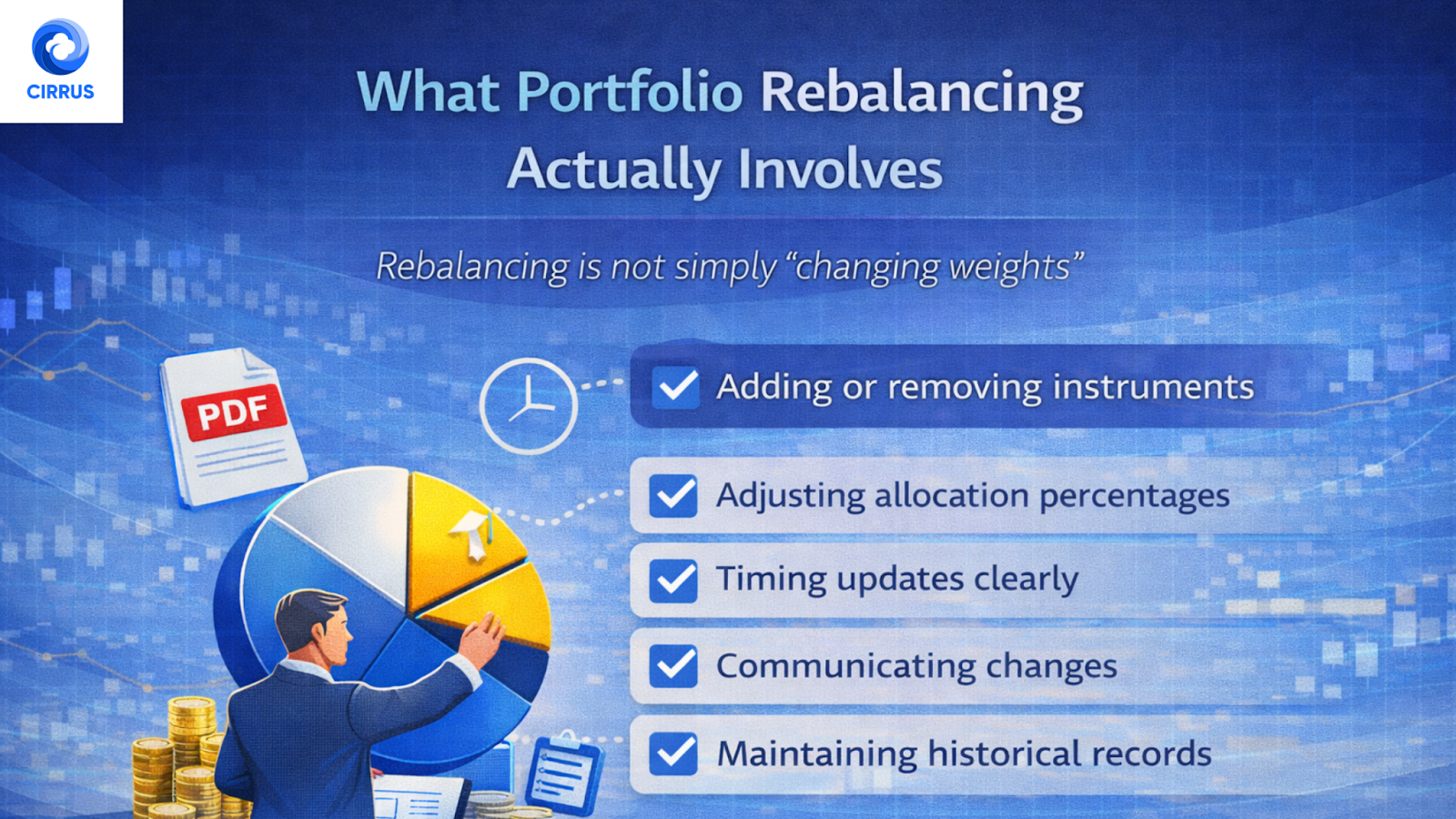
Rebalancing is not simply “changing weights.”For Research Analysts, portfolio rebalancing tools must support:
- Adding or removing instruments
- Adjusting allocation percentages
- Timing updates clearly
- Communicating changes consistently
- Maintaining historical records
When done manually, rebalancing becomes error-prone and stressful.
This is where model portfolio rebalancing for Research Analysts becomes essential.
Why Manual Rebalancing Fails at Scale
1. Delayed execution
Manual communication delays cause:
- Different subscribers act at different prices
- Inconsistent portfolio performance
Increased disputes
2. Confusion during updates
Without structured rebalancing:
- Users miss changes
- Allocation logic gets misinterpreted.
- Follow-up queries increase. This reduces confidence in the portfolio framework.
3. No audit trail.
Manual portfolio changes leave behind:
- No time-stamped history
- No record of what changed and when. This creates issues during reviews or audits.
That’s why portfolio rebalancing tools must include logging and traceability.
Real-Time Rebalancing: Why Timing Matters
In dynamic markets, delayed rebalancing can materially impact outcomes.
Real-time rebalancing enables:
- Faster portfolio alignment
- Reduced slippage
- Clear execution windows
This is especially important when portfolios are tied to live market conditions.
How Structured Rebalancing Improves Compliance
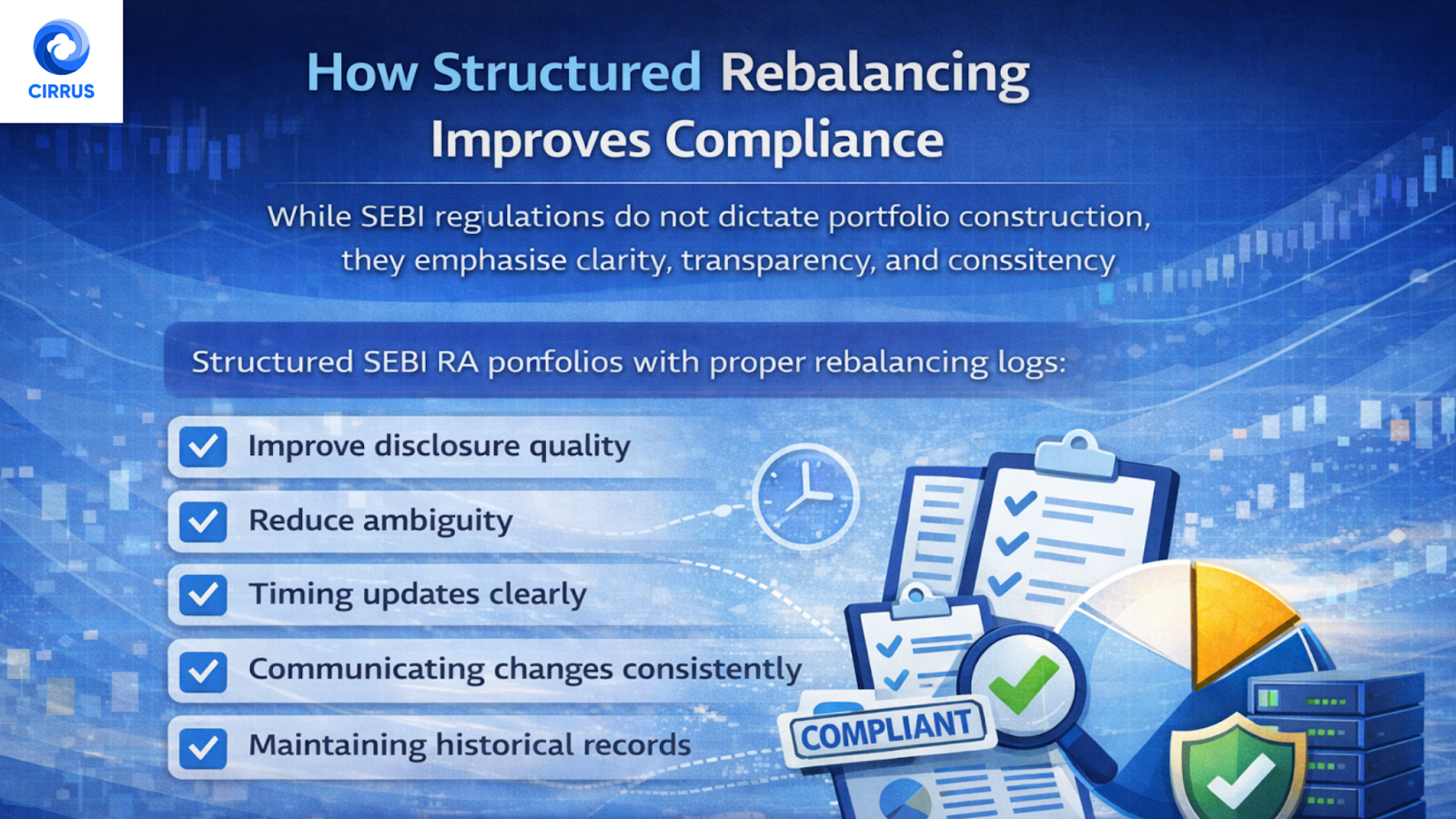
While SEBI regulations do not dictate portfolio construction, they emphasise clarity, transparency, and consistency.
Structured SEBI RA portfolios with proper rebalancing logs:
- Improve disclosure quality
- Reduce ambiguity
- Support audit readiness
Automation ensures that every rebalance is:
- Time-stamped
- Documented
- Consistently communicated
This protects both the RA and the subscriber.
Model Portfolios as a Scaling Lever
Research Analysts who want to scale the advisory business RA eventually move toward portfolios.
Why?
- Portfolios reduce decision fatigue for users.
- Advisory delivery becomes standardised.
- Research effort scales better. But this only works if rebalancing is systematic.
Without the right portfolio rebalancing tools, portfolios become harder to manage than individual calls.
What to Look for in Portfolio Rebalancing Tools
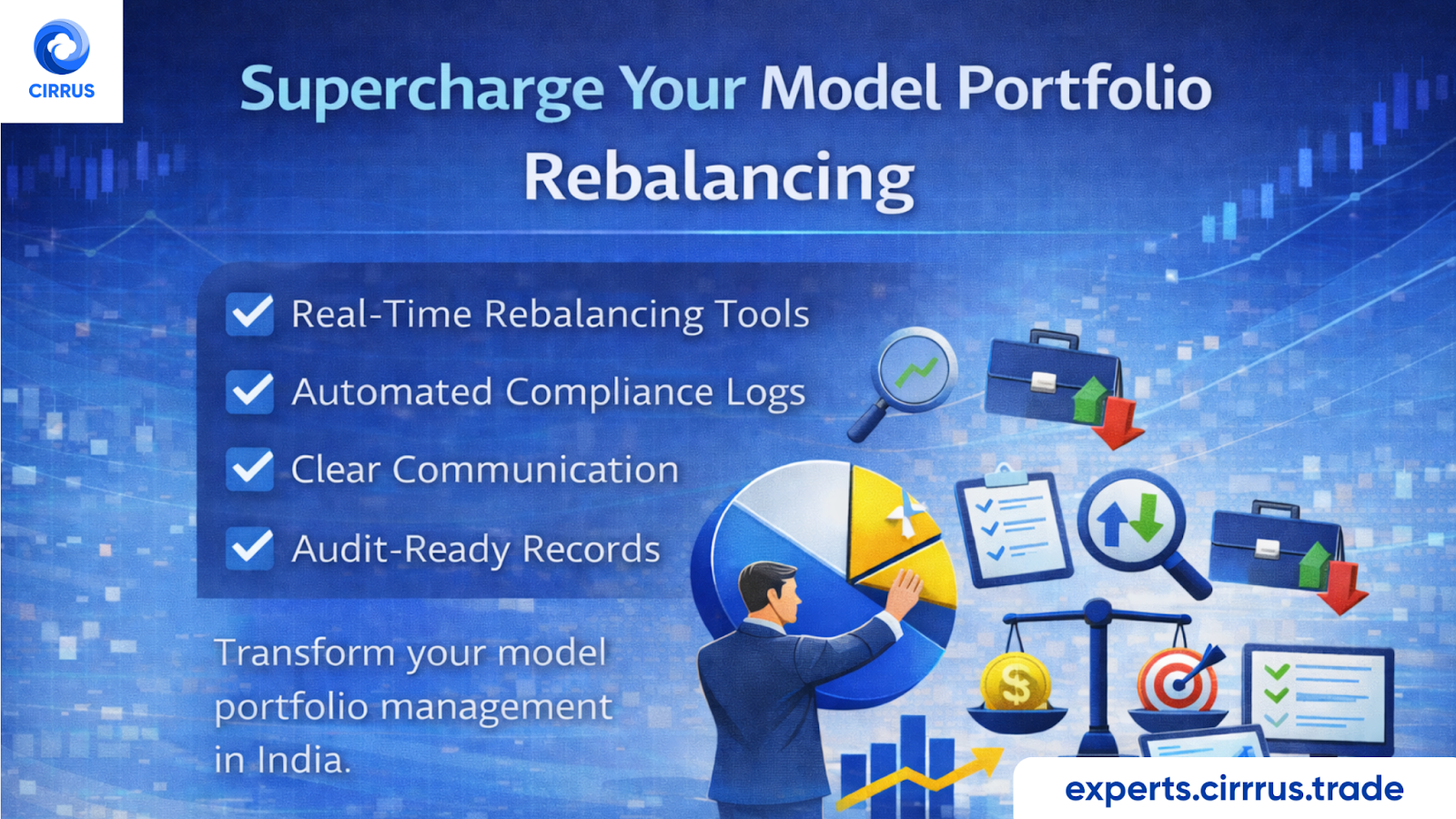
When evaluating a Research Analyst platform in India, RAs should ensure the platform supports:
- Creation of multiple RA model portfolios
- Real-time rebalancing capabilities
- Clear communication of changes
- Allocation history tracking
- Audit-ready records. The goal is not frequent changes, but controlled, transparent changes.
Common Mistakes RAs Make with Model Portfolios
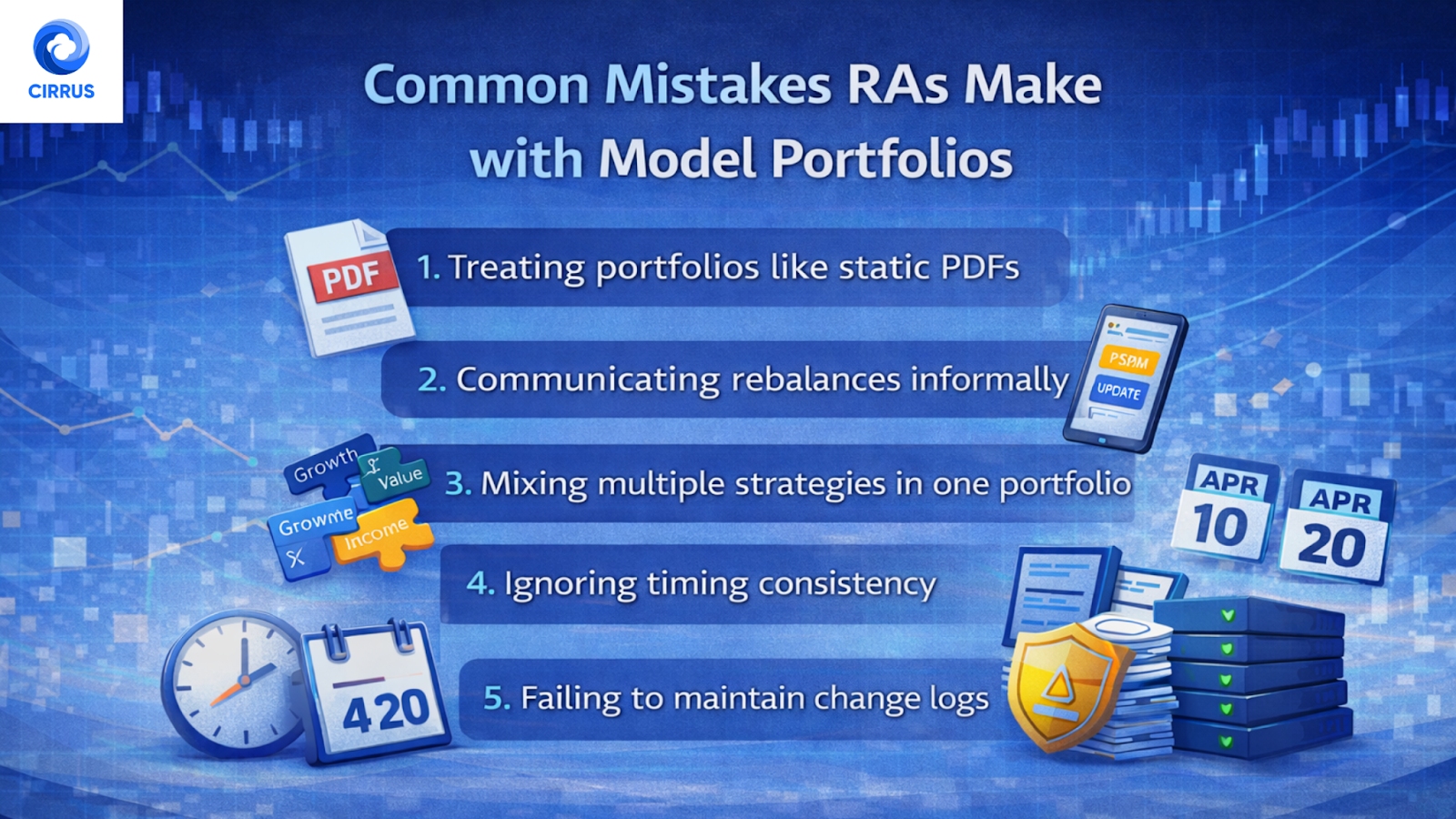
- Treating portfolios like static PDFs
- Communicating rebalances informally
- Mixing multiple strategies in one portfolio
- Ignoring timing consistency
- Failing to maintain change logs
Each of these reduces credibility and increases operational risk.
Why 2025 Is the Turning Point for Model Portfolios
Investor expectations are evolving. Markets are faster. Regulatory scrutiny is sharper.
In this environment, model portfolio RA frameworks must be:
- System-driven
- Transparent
- Scalable
RAs who adopt structured model portfolio rebalancing for Research Analysts will deliver better experiences with lower stress.
 Team Cirrus
FAQ Pack:
Q1. What is a model portfolio for Research Analysts? A model portfolio is a structured basket of instruments created by an RA to represent a specific strategy or risk profile.
Q2. Why is portfolio rebalancing important for SEBI RAs? Rebalancing keeps portfolios aligned with strategy and reduces inconsistency across subscribers.
Q3. What are portfolio rebalancing tools? They are systems that allow Research Analysts to update allocations, track changes, and communicate rebalances consistently.
Q4. How does real-time rebalancing help advisory businesses? It reduces execution delays, improves consistency, and enhances transparency.
Q5. Can model portfolios help RAs scale advisory businesses? Yes. Structured portfolios standardise advisory delivery and improve scalability when managed correctly.
Final Thoughts
Model portfolios are powerful, but only when managed correctly.
For SEBI-registered Research Analysts, the real challenge is not creating portfolios, but maintaining them with discipline and structure.
Those who invest in robust RA model portfolios, reliable portfolio rebalancing tools, and transparent workflows will be best positioned to grow sustainably.
Because in 2025, professional advisory is defined by systems, not just ideas.